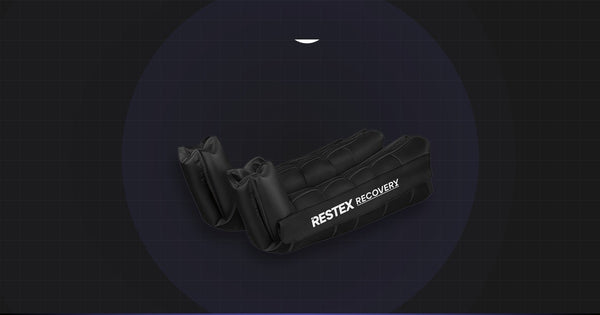
- Compression boots apply pneumatic compression to the legs: inflatable sleeves squeeze in successive waves, from the ankle towards the thigh, to get venous and lymphatic return moving again. It is a lymphatic drainage massage carried out by a machine rather than by hand.
- They relieve heavy legs, end-of-day swelling and the feeling of fatigue in the lower limbs. They are also used for sports recovery after an effort.
- A session lasts 20 to 45 minutes. Two to four sessions a week are enough to feel a lasting effect; a single session relieves in the moment and no more than that.
- In a salon, expect to pay around €80 per session. A device for home use costs €599.99 and works out cheaper from the eighth session onwards.
- This is not a medical treatment. With phlebitis, heart failure, thrombosis or an open wound, a doctor's opinion is essential before any session.
You have probably come across the idea already, in a beauty salon, on Instagram or from a runner. Compression boots have settled in over a few years in wellness centres, physiotherapy practices and sports recovery rooms, and then in living rooms, as the devices became affordable.
Behind the term there is a simple mechanism and a handful of received ideas. This guide explains what compression boots really do, what they do not do, who they are for, how often to use them, and how to choose between a salon and a pair of your own.
What are compression boots?
Compression boots, sold in some places as recovery boots, work by sequential pneumatic compression. In practice: you slide into sleeves that look like tall boots, a control unit inflates them with air, and the pressure travels from the bottom upwards, from the ankle towards the thigh, in successive waves.
The word "sequential" is the key, and it is what separates these boots from a tight bandage. The compression is neither uniform nor continuous: it progresses in one precise direction, the direction of return circulation. Each chamber inflates in turn and pushes fluid towards the upper body, where the venous and lymphatic systems take over.
The principle is nothing new. It has been used for decades in hospitals, in particular to prevent and to help manage oedema. What has changed recently is miniaturisation: cordless, quiet devices controlled from a touch screen have taken the technique out of the treatment room.
How do compression boots work?
Blood travelling down into the legs gets there thanks to the heart. Blood coming back up has no dedicated pump: it relies on the calf muscles contracting and on a network of valves that stop it falling back down. When you sit or stand for several hours without moving, that mechanism slows to a crawl. Fluid pools, tissue swells, and the heavy feeling shows up at the end of the day.
The boots mechanically stand in for what walking would do naturally, which is also the principle behind a lymphatic drainage massage. The chambers inflate in order and accompany the fluid on its way back up. That is why the effect is often felt from the very first session, as an impression of lightness, and why raising the legs slightly during the session is recommended.
Two parameters determine how well a device performs.
The number of chambers, and above all how they are arranged. A device with six overlapping chambers does not work like a device with six separate ones. In the first case the compression zones partly cover each other, the wave is continuous and there is no uncompressed gap between two chambers. In the second, bands of leg are left that the pressure never touches. This is the most important technical difference between two devices at the same price, and it is also the least visible on a product page.
The available pressure. It is measured in millimetres of mercury (mmHg). Below 100 mmHg the sensation stays superficial. A range of 40 to 260 mmHg lets you start gently and then build up according to tolerance and goal. For wellness use, most people settle between 120 and 180 mmHg.
What are compression boots for, and who are they for?
Two very different audiences use compression boots, for reasons that barely overlap.
| Who | Why | How to use it |
|---|---|---|
| Heavy legs and swelling | Long hours standing or seated, heat, hormonal variations, sluggish venous return | 20 to 30 min at the end of the day, moderate pressure, 3 to 4 times a week |
| Water retention and a puffy feeling | Fluid stagnating in the tissue, made worse by a sedentary routine and by heat | 30 min, drainage programme, regularity matters more than intensity |
| Sports recovery | Getting back to normal faster after a long or hard effort | 20 to 30 min in the hours that follow the session, higher pressure |
| Long journeys and travel | Extended immobility on a plane, a train or in a car | One session on arrival, before going back to normal activity |
What the four situations have in common is immobility. Compression boots do not bring much to someone who walks three hours a day. They become interesting as soon as daily life gets in the way of moving enough, which describes just about every desk job and plenty of jobs spent on your feet.
What compression boots do not do
Worth saying plainly, because this is the ground where the most questionable promises circulate.
They do not make you lose weight. Compression moves fluid, not fat. Ankle or calf circumference often drops after a session: that is water that has shifted, not fat that has gone. The measurement comes back if nothing else changes.
They do not remove cellulite. They can improve the look of the skin by reducing the retention that accentuates the dimpling, and plenty of people notice it. The structure of the fatty tissue itself does not change. Any claim to the contrary is overpromising.
They do not cure venous disease. Established venous insufficiency, varicose veins and lymphoedema call for a diagnosis and proper care. Compression boots can support that, alongside it and with your doctor's agreement, never replace it.
They do not replace movement. This is the point most often forgotten. A 30 minute session does not make up for eight hours in a chair. The best result always comes from combining the two.
How many sessions, and how often?
This is the most common question, and the answer is counter-intuitive: regularity counts for more than duration or intensity.
The first two weeks
Low pressure, between 80 and 120 mmHg, long enough to get used to the sensation. The goal is not maximum effect, it is to check that the compression is comfortable and to find the programme that suits you.
The steady rhythm
Pressure between 120 and 180 mmHg according to tolerance. This is the rhythm at which the effect becomes lasting rather than occasional, meaning the feeling of lightness holds beyond the evening.
Hot spells and heavy loads
A heatwave, a long journey, a demanding training week, late pregnancy once a doctor has agreed. A daily session is not a problem as long as it stays comfortable.
Beyond 45 minutes the extra benefit is small. Two 30 minute sessions in the week beat a single hour and a half.
In a salon or at home?
The question is settled almost entirely by arithmetic, because the technique is the same on both sides. What a salon sells as compression therapy, or as a mechanical lymphatic drainage massage, is the same sequence of inflating chambers.
| In a salon | At home | |
|---|---|---|
| Cost | Around €80 per session | €599.99 once, then nothing |
| After 8 sessions | €640 | €599.99 |
| After 30 sessions | €2,400 | €599.99 |
| Availability | By appointment, during opening hours | Whenever you want, Sunday evening included |
| Regularity in practice | Hard to keep up, and that is the main obstacle | The only hurdle is taking the device out of its bag |
| Guidance | A professional sets the parameters | You set them, which calls for a device that is easy to read |
The tipping point therefore sits at around the eighth session. If you plan to make compression sessions a habit rather than an occasional treat, a device of your own pays for itself in under two months at the recommended rhythm.
That said, the salon keeps two real advantages: trying before buying, and having the settings chosen by someone who knows the equipment. If you are hesitating, two or three sessions in a centre are a sensible way to check that the sensation suits you before investing.
How to choose compression boots
Prices on the market run from €150 to over €2,500, for products that look alike in photographs. Here is what really differs, in order of importance.
| Criterion | What to look at |
|---|---|
| Overlapping chambers | The number one criterion, and the one nobody puts forward. Six chambers that cover each other beat eight separate ones, because no zone is left uncompressed. |
| Pressure range | A wide range, in the order of 40 to 260 mmHg, lets you start gently and build up. A device capped at 100 mmHg runs out of room quickly. |
| Size and length | It is the inseam length that determines the size, not the thigh circumference. A sleeve that is too short slips during inflation and the compression is lost. |
| Battery life | A mains-only device ties you to a socket. A 5,200 mAh battery gives 2 to 4 hours of use depending on the programme and the pressure, which is several sessions between charges. |
| Noise | A noisy compressor ends up in a cupboard. Below 40 decibels, the session happens in front of a film without turning the sound up. |
| Closure | A zip lasts. Other closure systems stretch out and lose their hold after a few months. |
| Warranty and standards | Two years of warranty and CE, ISO and ROHS marking. On a device that pushes pressurised air against the body, that is not a formality. |
A useful reference point on price: the devices installed in salons and practices generally cost between €1,200 and €2,500. Below €200 you mostly find models with separate chambers, limited pressure and no serious warranty. The middle of the range, around €600, covers devices that carry the professional specifications without the cost structure of equipment built for a centre.
On choosing a size, which is the leading cause of dissatisfaction across all devices, the size guide sets out the measurement to take and what to do when you fall between two sizes.
Are there any contraindications?
Yes, and they are serious. Compression acts on circulation: where circulation is already disturbed by a condition, it can make things worse.
You must ask your doctor before any session if you have a current or recent thrombosis or phlebitis, heart or kidney failure, uncontrolled high blood pressure, an acute infection or inflammation in a limb, an open wound, a recent skin graft, active cancer, or if you have a pacemaker. Pregnancy also calls for medical advice first.
Outside those situations, side effects are rare and mild: slight tingling, a feeling of warmth, sometimes a passing mark if the pressure was set too high. If pain appears during a session, lower the pressure or stop, and never try to push through. The compression should be firm and comfortable, not painful.
Are compression boots covered by insurance?
For wellness or sports recovery use, generally not. Coverage depends entirely on the country you live in and on the terms of your own policy, so the only reliable answer is the one your insurer gives you in writing.
Two broad principles hold almost everywhere. A device bought for wellness or recovery, without a prescription, is treated as a consumer purchase and is not reimbursed. Care delivered or prescribed by a health professional, within a defined course of treatment, is the only situation where cover may come into play, and it follows a medical route that has nothing to do with buying a wellness device.
Some private health policies include a wellness or complementary therapies allowance that can cover part of the cost of sessions in a salon. Whether yours does depends entirely on the contract. Check the wording with your insurer before counting on it, and ask specifically whether the appliance itself is excluded, because it usually is.
What happens during a session?
Nothing complicated, but three details change the comfort.
Lie down or half-recline, legs slightly raised. Put the sleeves on over thin clothing rather than against bare skin: it is more pleasant and the fabric slides better. Close them all the way up, plug in, choose the programme and the pressure, and start.
During the session you feel the wave climb from the ankle towards the thigh, then everything release before the next wave. It is repetitive and rather soothing. Many people use the time to read or watch an episode of something, which is precisely the point of a quiet device.
Afterwards, drink a glass of water and avoid standing up abruptly. The feeling of lightness is strongest in the minutes that follow.
Lymphatic drainage at home with Restex
Restex boots carry the specifications described above: six overlapping chambers, a range of 40 to 260 mmHg, six preset programmes, a 10 to 90 minute timer, a 5,200 mAh battery giving 2 to 4 hours of use depending on the programme and the pressure, operation under 40 decibels and a full-length zip. CE, ISO and ROHS marking, 2-year warranty.
Three sizes, determined by the inseam length measured from the floor to the groin: M up to 79 cm, L from 80 to 100 cm, XXL beyond 101 cm. If your thigh circumference exceeds the limit for your size, extensions add 10 cm of circumference, in the same size as the boot. Going up a size would only add length, not width.
The price is €599.99, with free delivery from €199, and 30 days to change your mind.
See the Restex compression boots
Frequently asked questions about compression boots
What are the benefits of compression boots?
They get venous and lymphatic return moving again, which relieves heavy legs, reduces end-of-day swelling and the feeling of fatigue in the legs. In sports recovery, they speed up the return to normal after a long effort. The effect is felt from the first session, but it only becomes lasting with regular use, around three sessions a week.
What are the drawbacks of compression boots?
The main one is that they ask for regularity: an isolated session relieves in the moment and nothing more. They do not address any cause, they mechanically compensate for a lack of movement. They are also contraindicated with thrombosis, phlebitis, heart or kidney failure, acute infection, an open wound or active cancer. In a healthy person, side effects stay rare and mild: slight tingling, a feeling of warmth, sometimes a passing mark if the pressure was set too high.
Are compression boots covered by health insurance?
For wellness or sports recovery use, generally not: coverage depends entirely on your country and on your own policy, and a device bought without a prescription is treated as a consumer purchase. Cover may come into play only for care delivered or prescribed by a health professional, which is a medical route distinct from buying a wellness device. Some private policies include a wellness allowance covering part of the cost of salon sessions, so check the wording with your insurer.
How much does a lymphatic drainage session cost?
Expect around €80 per session, with variation between cities and between membership formulas. At that rate, a device of your own at €599.99 works out cheaper from the eighth session onwards, and the tipping point arrives in under two months at the recommended rhythm of three sessions a week.
Is it good to use compression boots every day?
Yes, as long as the session stays comfortable and there is no contraindication. A daily 20 to 30 minute session is not a problem, and it makes sense during hot spells or demanding training weeks. That said, three to four sessions a week are enough for a lasting effect: beyond that, the extra benefit is marginal.
Do compression boots help you lose weight?
No. They move fluid, not fat. A smaller ankle or calf measurement after a session reflects less water retention, and it comes back if nothing changes in activity or diet. Any claim that compression boots cause weight loss is overpromising.
Do compression boots actually work?
Yes for what they are aimed at, namely return circulation and the feeling of heaviness, provided they are used regularly. How well they work depends above all on two things: overlapping rather than separate chambers, so that no part of the leg is left without compression, and a pressure range wide enough to build up gradually. They do not treat any venous condition.
When should you use compression boots?
At the end of the day after long hours standing or seated, in the hours that follow a hard training session, and when you get back from a long journey by plane, train or car. What those situations have in common is immobility: that is where compression boots usefully stand in for what walking would do naturally.
How long before you feel an effect?
The feeling of lightness shows up from the first session, but it is temporary. For the effect to hold beyond the evening, allow two to three weeks of regular use, at three sessions a week.
What pressure should a beginner choose?
Start between 80 and 120 mmHg for two weeks, then build up according to your tolerance. Most people settle between 120 and 180 mmHg for everyday use. The compression should be firm without ever being painful: if pain appears, lower the pressure or stop.
What is the difference between compression boots and a manual lymphatic drainage massage?
A manual lymphatic drainage massage is performed by a professional, with precise movements that can be adapted in real time. Compression boots mechanically reproduce the principle of progressive compression, in a less subtle but repeatable way, at lower cost and available at any time. The two approaches complement each other rather than compete.
How do you know which size of compression boots to choose?
The inseam length decides, measured standing with feet flat, from the floor up to the groin: M up to 79 cm, L from 80 to 100 cm, XXL beyond 101 cm. If your thigh circumference exceeds the limit for that size (66 cm in M, 71 cm in L, 75 cm in XXL), you add extensions in the same size as the boot rather than going up a size, which would only add length.
Read next: compression boots or a manual lymphatic drainage massage, which to choose, compression boots at home or in a centre, and swollen legs in the evening, what to do.

Bottes Restex Recovery.
Les techniques décrites dans cet article — 6 chambres chevauchantes, compression séquentielle, 30 minutes depuis votre canapé.
Discover the boots