
You get home from work, you take off your shoes, and your ankles have doubled in size. Your legs feel heavy, tight, sometimes even painful. If this sounds familiar, you are not alone — water retention in the legs affects millions of women, particularly between the ages of 30 and 55. The good news: it is not inevitable. In this article, we will understand together why this happens, what the real causes are, and above all what concrete solutions exist to enjoy light legs every day — including approaches you can practise at home, without an appointment.
- Water retention (oedema) is a fluid build-up in the legs that affects women more, driven by hormones, a sedentary lifestyle, salt and heat.
- Natural levers help: move regularly, cut back on salt and boost potassium, stay hydrated, elevate your legs and consider lymphatic drainage.
- At-home pressotherapy reproduces the drainage principle: Restex Recovery boots use OptiFlow with 6 overlapping air chambers, pressure 80–260 mmHg, under 40 dB and a battery lasting 2 to 4 hours.
- At €589.99 the boots pay for themselves in around 8 clinic sessions (about €80 each), are CE/ISO/ROHS certified and come with a 2-year warranty.
What is water retention and why does it affect women more?
Water retention — or oedema — refers to an abnormal build-up of fluid in the body's tissues, particularly in the lower limbs. Normally, our lymphatic system and venous circulation ensure constant drainage: interstitial fluid is reabsorbed and returned to the heart. When this mechanism works poorly, fluid accumulates, causing swelling, a feeling of heaviness and discomfort.
Women are significantly more affected than men, and this is no coincidence. Several physiological factors explain this predisposition:
- Hormonal variations: fluctuations in oestrogen and progesterone during the menstrual cycle, pregnancy or menopause directly influence the permeability of blood vessels. When oestrogen levels rise, vein walls become more permeable, allowing more fluid to escape into the tissues.
- Venous anatomy: the veins in the legs have to fight against gravity to bring blood back to the heart. The venous valves — those little "doors" that stop blood from flowing back down — are under considerable pressure, and in women they can weaken earlier under the influence of hormones.
- Pregnancy: the weight of the uterus compresses the veins in the pelvis, slowing the return of blood from the legs. Water retention is one of the most common symptoms of pregnancy, particularly in the third trimester.
- Menopause: the drop in hormones leads to a loss of elasticity in the vein walls, worsening circulation and retention problems.
It is important to distinguish benign water retention — the kind linked to lifestyle, hormones or diet — from pathological oedema, which can signal a heart, kidney or liver problem. If your swelling is sudden, asymmetrical, painful or accompanied by shortness of breath, consult your doctor without delay. This article deals with functional water retention, the everyday kind, which can be considerably improved with the right habits.
The main causes of water retention in the legs
To act effectively against water retention, you first need to understand what causes it. Here are the most common causes among active women.
A sedentary lifestyle and prolonged standing or sitting
This is probably the number one cause in our modern lifestyle. Whether you sit at a desk eight hours a day or stand in a shop, a static position prevents the calf muscles from playing their role as a "venous pump". When these muscles contract as you walk, they compress the veins and push blood back towards the heart. Without movement, blood stagnates, pressure rises in the leg veins, and fluid seeps into the surrounding tissues.
A diet too high in sodium
Salt attracts water. When your diet contains too much sodium — and ready meals, industrial bread and sauces contain far more than you might think — your body retains more water to maintain balance. This excess first shows up in the extremities: feet, ankles, calves.
Hormonal imbalances
Beyond the normal menstrual cycle, certain hormonal treatments (contraception, HRT at menopause) can worsen water retention. Premenstrual syndrome is often accompanied by swollen legs in the days leading up to a period — a phenomenon directly linked to spikes in progesterone.
Heat
In summer, your veins dilate to help release body heat. This vasodilation, while useful for thermoregulation, reduces the efficiency of venous return. The result: your legs swell more when it is hot, especially if you are not very active.
Veno-lymphatic insufficiency
In some women, the venous and lymphatic systems work below their optimal capacity. This is not necessarily a serious illness, but a constitutional fragility that makes you more vulnerable to water retention. A family history of varicose veins or heavy legs is often an indicator.
Lack of hydration
It may seem paradoxical, but drinking too little water makes retention worse. When the body is short of fluids, it triggers conservation mechanisms: it holds on to the little water available, including in the leg tissues. Drinking enough (1.5 to 2 litres a day) actually helps the body eliminate excess fluid.
Natural solutions to reduce water retention
Before talking about devices or treatments, there are simple changes that can make a real difference. Ideally, combine several of these approaches for a cumulative effect.
Move regularly — even gently
You do not need to run a marathon. Walking, swimming, gentle cycling or even simply climbing stairs activate the calf muscle pump and get circulation going again. The goal: never stay in the same position for more than two hours without moving. If you work sitting down, stand up every hour to walk for a few minutes. If you work standing up, take seated breaks and elevate your legs whenever possible.
Adjust your diet
- Cut back on salt: cook at home as much as possible, limit ready meals, and watch out for bread (a baguette contains around 4 to 5 g of salt).
- Increase potassium: bananas, avocados, spinach, lentils — potassium helps balance sodium and supports the elimination of water.
- Favour draining foods: cucumber, watermelon, asparagus, artichoke, fennel, pineapple. These foods have a natural diuretic effect.
- Stay hydrated: 1.5 to 2 litres of water a day. Cherry-stem, orthosiphon or hawkweed (pilosella) herbal teas are traditionally used for their draining effect.
Elevate your legs
Simple but remarkably effective: raising your legs 15 to 20 centimetres above heart level for 20 minutes promotes venous return through gravity. Do it in the evening when you get home from work, or place a cushion under your feet during the night. This one habit alone can noticeably reduce swelling the next morning.
Manual lymphatic drainage
Performed by a physiotherapist or a trained practitioner, manual lymphatic drainage involves gentle, rhythmic pressure that stimulates the flow of lymph. It is a recognised and effective technique — but it has a practical drawback: you have to travel, book an appointment, and each session generally costs around €80 at a clinic. For a chronic problem that requires regular sessions, the cost can quickly become a barrier.
It is precisely this realisation that led to the development of at-home pressotherapy devices, capable of reproducing the principle of lymphatic drainage independently. To learn more about lymphatic drainage and its benefits, read our complete guide to lymphatic drainage.
Graduated compression
Compression stockings or socks apply pressure that decreases from the ankle towards the knee, supporting venous return. They are particularly useful during long flights or days spent standing. Ask your pharmacist for advice on choosing the right compression class.
At-home pressotherapy: an effective, long-lasting solution
If you suffer from regular water retention in the legs, you have probably already considered lymphatic drainage at a specialist centre. The problem is the logistics: finding a slot, getting there, paying €80 per session, starting again every week or every two weeks. Over a year, that adds up to a considerable cost — and above all, it depends on your availability.
At-home pressotherapy offers a concrete alternative. The principle is the same as manual drainage: air chambers inflate and deflate sequentially around your legs, creating progressive compression from the ankle to the thigh. This mechanical action stimulates venous return and lymphatic drainage, helping your body to flush out the accumulated fluid.
How do Restex Recovery boots work?
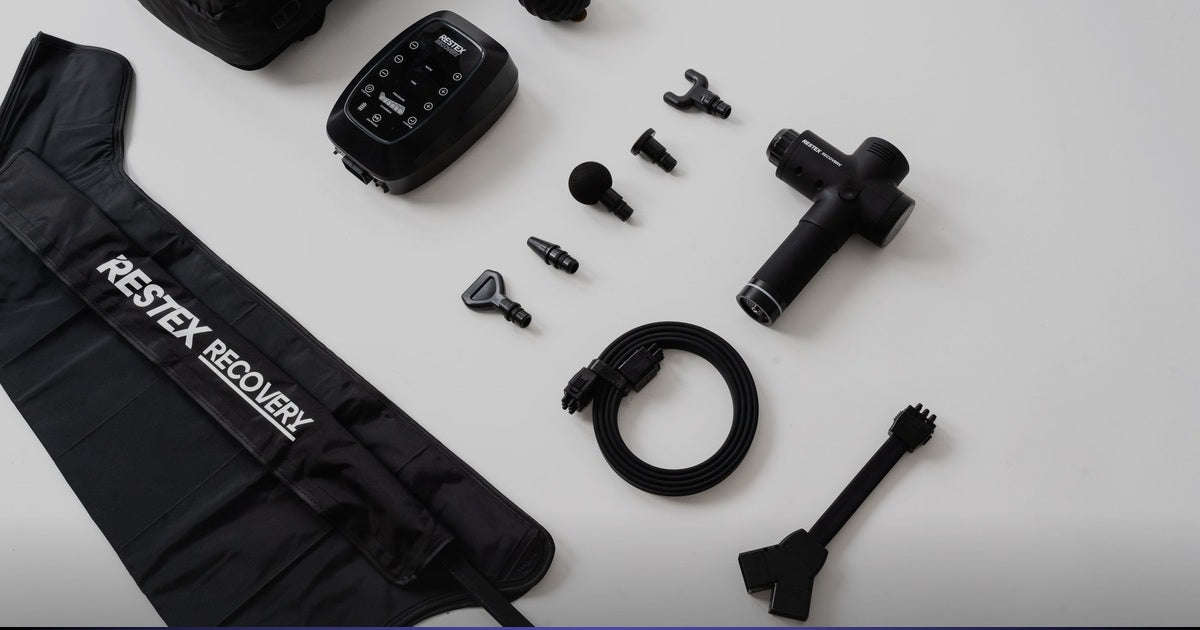
The Restex pressotherapy boots use OptiFlow technology, based on 6 overlapping air chambers — and this technical detail makes all the difference. Unlike entry-level devices whose chambers are separate (leaving "gaps" in the compression), overlapping chambers ensure continuous coverage of the leg, with no dead zones. The result: smoother, more complete, more comfortable drainage.
Here is what this means concretely for your daily life:
- 6 intelligent pre-set programmes: you choose the programme suited to your needs (drainage, relaxation, recovery) and the device does the rest.
- Adjustable pressure from 80 to 260 mmHg: you start gently and increase gradually according to your comfort. For water retention, moderate pressure (100-150 mmHg) is generally recommended.
- Quiet (under 40 dB): that is quieter than a whispered conversation. You can use them while watching your favourite series, reading, or working on your computer.
- Cordless and rechargeable: the 5,200 mAh battery offers 2 to 4 hours of use. No trailing cable, no need to be near a socket.
- Certified CE, ISO and ROHS: medical-grade quality and safety standards that guarantee a reliable, tested device.
- 2-year warranty: the best warranty in its price range.
The calculation that changes the perspective
The Restex boots are priced at €589.99. A lymphatic drainage session at a clinic costs €80 on average. In other words: the device pays for itself in around 8 sessions. If you had one session a week, that is less than two months to recoup your investment. After that, every use is free — and you can use it as often as you like, whenever you like.
It is this accessibility that makes the difference for women who suffer from chronic water retention: the treatment no longer depends on an appointment, a journey or a monthly budget. It is at home, available at any time.
What users say
With 31 verified reviews and a rating of 4.6/5 stars, user feedback confirms the benefits people feel. What comes up most often: the sensation of immediate lightness after a 30 to 45-minute session, the visible reduction in swelling, and the comfort of using it at home. One notable fact: the return rate is 0% in our online store — customers who take the time to learn about the product before buying are fully satisfied with their investment.
→ Discover the Restex Recovery boots
How to choose your pressotherapy device
If you are thinking of investing in an at-home pressotherapy device, several criteria deserve your attention. The market offers devices ranging from €150 to over €2,500, and the difference in quality is real.
The essential criteria
- The number and type of air chambers: the more chambers there are, the more progressive and precise the massage. But beyond the number, check whether the chambers overlap or not. Overlapping chambers (like the 6 OptiFlow chambers on Restex) provide uninterrupted drainage, whereas separate chambers create non-compressed zones between each section.
- The pressure range: a good device should offer enough range to adapt to different needs. A range of 80 to 260 mmHg covers both gentle drainage (water retention, heavy legs) and more intense sports recovery.
- The certifications: CE and ISO standards are not optional for this kind of device. They guarantee that the product has been tested to European safety standards. The ROHS standard guarantees the absence of hazardous substances.
- Battery life: if the device is corded, you are limited to one spot near a socket. A battery-powered device offers the freedom to use it in any room, in any position.
- The warranty: a direct indicator of the manufacturer's confidence in its product. A 2-year warranty is an excellent sign.
- Noise: if you plan to use the device in the evening while relaxing, the noise level matters. Below 40 dB, the device is almost inaudible.
For a detailed comparison of the different options available, to help you make the right choice, we have written a complete guide: pressotherapy boots at home or at a clinic, how to choose?
Why to avoid entry-level devices
Devices under €200 generally use 3 or 4 non-overlapping chambers, less durable materials, and offer limited pressure ranges. Above all, they often lack medical certifications — which poses a real safety issue for a device that applies pressure to your limbs. Drainage is less even, comfort is lower, and the lifespan is shorter. In the long run, a mid-range device like Restex (€589.99) works out cheaper than a low-end device replaced every year.
Frequently asked questions
Is pressotherapy effective against water retention?
Yes. Pressotherapy acts directly on the two mechanisms involved in water retention: venous return and lymphatic drainage. By applying sequential compression from the ankle to the thigh, it helps the body reabsorb and flush out the fluid built up in the tissues. Many users notice a visible reduction in swelling from the very first session. For lasting results, regular use (3 to 5 sessions a week) is recommended.
How long do I need to use the boots to see results?
Most users feel a sensation of lightness immediately after a 20 to 30-minute session. For visible, lasting results on chronic swelling, allow one to two weeks of regular use (one session a day or every other day). Each session can last from 10 to 90 minutes depending on the programme chosen and your comfort.
Are there any contraindications to pressotherapy?
Like any compression device, pressotherapy is not advised in certain cases: active deep vein thrombosis, skin infections in the treated area, uncontrolled heart failure, and certain skin conditions. If in doubt, consult your doctor before starting. For functional water retention (linked to lifestyle, hormones or diet), pressotherapy is generally very well tolerated.
Can I use the pressotherapy boots during pregnancy?
Water retention is very common during pregnancy, especially in the third trimester. However, using pressotherapy during pregnancy must always be approved by your doctor or midwife. Every pregnancy is different, and only a healthcare professional can assess whether pressotherapy is suitable for your situation.
What is the difference between at-home and clinic pressotherapy?
The principle is identical: sequential compression of the legs to stimulate drainage. At a clinic, the practitioner can manually adjust the treatment and combine it with other techniques. At home, the advantage is how often you can use it (every day if needed) and the absence of logistical constraints. Financially, a €589.99 device pays for itself in 8 clinic sessions (at around €80 a session). Over a year of regular use, the saving is considerable.
Enjoy light legs — at home, at your own pace
Water retention in the legs is not something you simply have to "live with". Between dietary adjustments, suitable physical activity and at-home drainage solutions, you have concrete levers to regain everyday comfort.
If you are looking for a lasting, practical and affordable solution, the Restex Recovery pressotherapy boots are designed for exactly that: to give you the benefits of professional lymphatic drainage, at home, whenever you need it — no appointment, no travel, no subscription.
6 overlapping chambers · 6 programmes · Certified CE/ISO/ROHS · 2-year warranty · €589.99
→ Discover the Restex Recovery boots and enjoy lighter legs

Bottes Restex Recovery.
Les techniques décrites dans cet article — 6 chambres chevauchantes, compression séquentielle, 30 minutes depuis votre canapé.
Discover the boots