
TL;DR:
- Chronic venous insufficiency is the main cause of heavy and swollen legs at the end of the day.
- Walking, leg elevation and compression are effective natural solutions to relieve these symptoms.
- Consistency in your routine and vigilance for warning signs prevent serious complications such as thrombosis.
You come home from work, settle onto the sofa at last, and that feeling returns: legs that pull, that weigh, that burn slightly. It's not ordinary muscle tiredness like after a workout. It's a diffuse heaviness, often accompanied by swollen ankles and an irresistible urge to elevate your feet. This sensation affects millions of women between 35 and 55 in France, and it has a very specific origin: circulatory and lymphatic. This article explains why it happens, what to watch for, and how to act concretely without resorting to medication.
Table of contents
- Understanding heavy leg syndrome and chronic tiredness
- Aggravating factors and mistakes to avoid
- Natural and effective solutions for relieving heavy legs
- When to worry and how to track your progress
- Our perspective: what we too often forget about leg tiredness
- Take action with innovative compression solutions
- Frequently asked questions about heavy legs
Key points
| Point | Details |
|---|---|
| Common cause | Heavy legs in women are mostly of venous origin and not linked to a serious disease. |
| Proven solutions | Compression and regular movement are proven effective for lasting relief without medication. |
| Winning combined approach | Focusing on physical activity, dietary hygiene and compression delivers superior results to any isolated intervention. |
| Essential monitoring | Recognising warning signs and tracking your progress enables early action and adjustment of solutions over time. |
Understanding heavy leg syndrome and chronic tiredness
Leg tiredness at the end of the day isn't in your head. It's also not simply a consequence of ageing. It has a precise physiological mechanism called chronic venous insufficiency, or CVI. In this situation, the valves in the veins, which should normally prevent blood from flowing back down to the feet, don't work properly. Blood stagnates in the lower limbs instead of returning efficiently to the heart.
The result: increased pressure in the leg veins, a sensation of heaviness, swelling at the end of the day, and sometimes night cramps. This isn't trivial. 30% of the French population is affected by venous insufficiency, around 18 million people. And women are twice as likely to be affected as men. Hormonal variations linked to menstrual cycles, pregnancy and the perimenopause weaken venous walls and encourage blood vessel dilation.
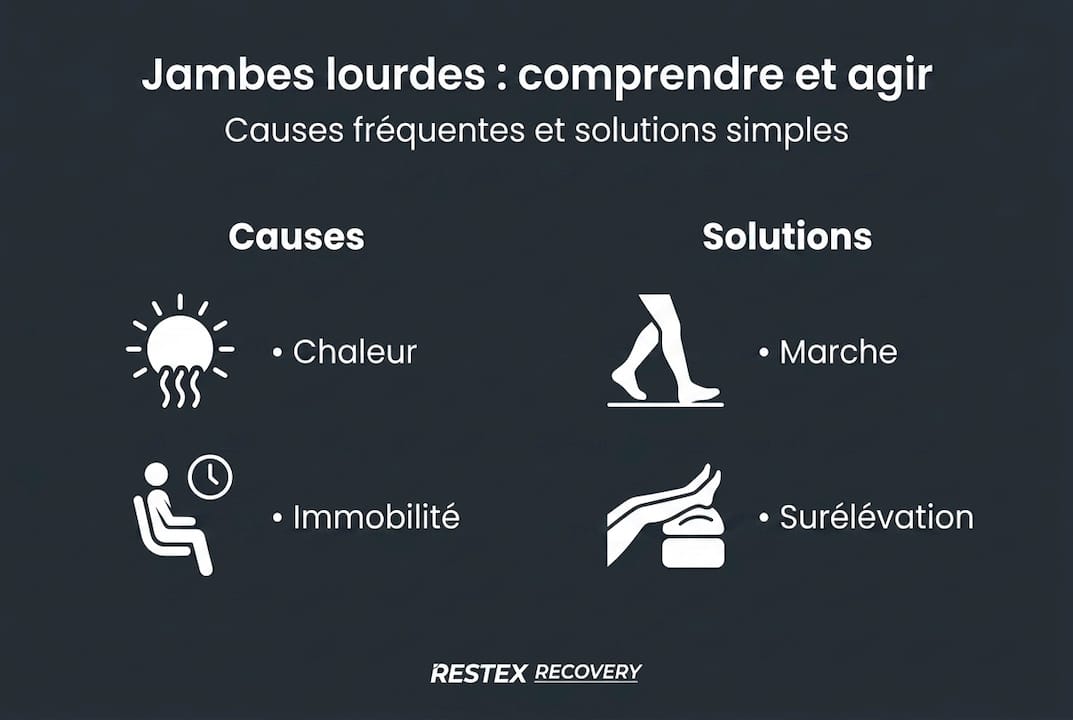
How to distinguish CVI from other problems?
It's important to differentiate venous tiredness from other possible causes. A lack of iron or magnesium can cause general tiredness and cramps, but it doesn't create the characteristic evening swelling. Chronic stress and lack of sleep worsen perceived tiredness, but without the blood stagnation mechanism. Sedentary behaviour, on the other hand, directly amplifies CVI because the calf muscle pump, which helps blood rise, is no longer activated sufficiently.
| Cause | Main symptom | Aggravating factor | Differentiator |
|---|---|---|---|
| Venous insufficiency | Heaviness, evening swelling | Heat, immobility | Ankle swelling |
| Iron deficiency | General tiredness | Physical effort | Paleness, breathlessness |
| Magnesium deficiency | Cramps, irritability | Stress | No swelling |
| Sedentary lifestyle | Stiffness, diffuse tiredness | Long hours sitting | Improves with walking |
| Chronic stress | Muscle tension | Intense work | No day/evening variation |
Specific signals to watch for with CVI are:
- Heaviness that sets in from the morning in advanced cases
- Swelling of ankles or feet at the end of the day
- Sensation of heat in the legs
- Difficulty standing for more than 30 minutes
- Immediate relief when you elevate your legs
To relieve heavy legs effectively, you must first understand that the problem is mechanical before it's chemical. The veins no longer pump properly. The solution must therefore act on this failing pump.
After understanding that these symptoms are common and widely shared, let's look at which factors worsen or relieve the problem.
Aggravating factors and mistakes to avoid
Certain everyday behaviours transform moderate discomfort into real suffering. Identifying them allows you to act today, without waiting for a medical consultation.
The major culprits of modern life
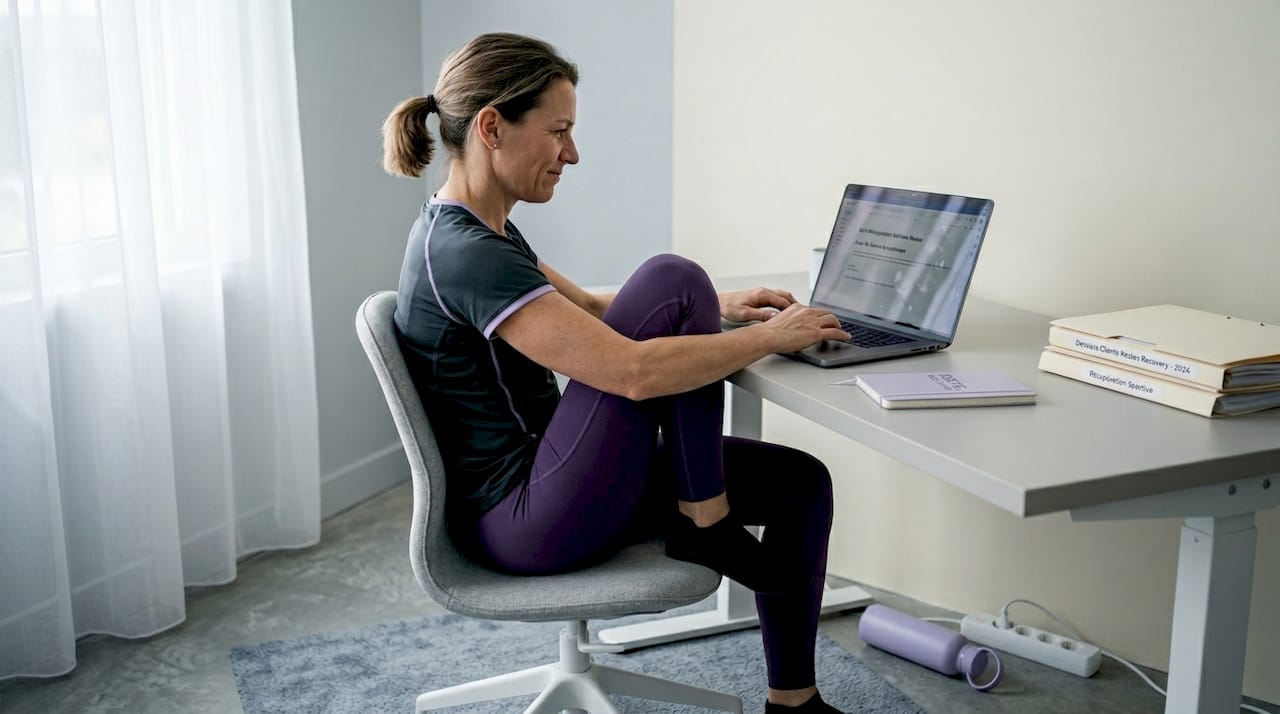
Prolonged immobility is enemy number one. Whether you work sitting behind a desk for 8 hours or standing at a shop till, the result is the same: the calf muscle pump no longer plays its role. Blood stagnates. Legs swell.
Heat is an often underestimated factor. A bath that's too hot, intense sunshine, a sauna session or even electric blankets cause veins to dilate, which immediately worsens blood stagnation. This is why heavy legs are always worse in summer.
Women aged 35 to 55 are particularly vulnerable to hormonal variations: progesterone relaxes venous walls, which encourages their dilation. Symptoms often intensify in the second half of the menstrual cycle, during pregnancy, and approaching the menopause.
The most common mistakes
| Behaviour | Why it's problematic | Recommended alternative |
|---|---|---|
| Hot bath in the evening | Dilates veins | Cool ascending shower |
| Excess salt | Encourages water retention | Less than 5g/day |
| Regular alcohol | Vasodilator | Water and herbal teas |
| High heels all day | Deactivates calf pump | Alternate with flat shoes |
| Sitting without moving | Blood stagnation | Stand every 45 min |
| Cooling creams alone | Temporary superficial effect | Compression + movement |
Isolated approaches give limited results. A cooling cream relieves for 10 minutes. A plant alone doesn't compensate for an entire day of immobility. It's the combination of active movement and mechanical compression that produces measurable and lasting effects on circulation.
Pro tip: If you work sitting down, place a small object under your desk and perform ankle flexions every 45 minutes. This simple action activates the calf muscle pump and significantly reduces venous stagnation over the course of the day.
You can also explore leg recovery tips to integrate easily into your routine, without complex equipment or a reorganised schedule.
Knowing the pitfalls to avoid gives you a solid foundation for action. Now let's look at which concrete solutions can improve circulation and provide lasting relief.
Natural and effective solutions for relieving heavy legs
No need for medication to obtain real relief. Natural solutions, applied with consistency, give proven results. The key: don't choose just one, but combine them intelligently in a daily routine.
Your daily protocol in 6 steps
1. Walk for 30 minutes every day. Walking is the reference treatment for venous insufficiency. With each step, your calf muscle contracts and acts like a real pump that propels blood upwards. Cycling and swimming produce the same effects, with the advantage of creating no joint impact. Avoid high-impact sports in hot weather.
2. Elevate your legs several times a day. Lie down and place your legs above your heart level for 10 to 15 minutes. Do this first thing in the morning, at lunchtime, and in the evening before sleeping. This simple action uses gravity to help blood return naturally to the heart.
3. Wear class 1 or 2 compression stockings. Studies show a reduction in venous symptoms in 85% of women after 3 months of regular use. Put them on in the morning before getting up, not at the end of the day when swelling is already established. Your doctor or pharmacist can guide you towards the appropriate class.
4. Hydrate properly. Between 1.5 and 2 litres of water per day thin the blood and reduce viscosity that encourages stagnation. Good hydration also limits paradoxical water retention: when the body lacks water, it stores more in the tissues.
5. Practice drainage massage. Perform gentle upward strokes from feet to thighs, always in the direction of venous return. This type of manual lymphatic massage can be done yourself with a light vegetable oil. The aim: mobilise stagnant fluids towards the inguinal lymph nodes.
6. Adopt an anti-retention diet. Reduce salt, increase foods rich in magnesium (almonds, spinach, dark chocolate) and iron (lentils, lean red meat, parsley). Antioxidants found in red berries, citrus fruits and green tea strengthen venous walls.
« Compression and walking form the reference non-surgical treatment for venous insufficiency. Together, they surpass each method taken in isolation. »
Pro tip: Adopt the 20-minute evening rule: 10 minutes with legs elevated followed by 10 minutes of drainage massage. This combination triggers effective lymphatic drainage just before sleep, when the body naturally activates its tissue recovery.
To go further in organising your routine, the heavy leg recovery steps proposed by Restex Recovery detail each action precisely.
Once a concrete plan is in place, it's important to know when to consult and how to monitor your progress.
When to worry and how to track your progress
The vast majority of heavy leg cases can be managed very well with the methods described above. But certain signals must not be ignored, as they can indicate a serious complication.
Warning signs requiring urgent consultation
« Any leg that suddenly becomes red, hot, swollen and painful on one side only should suggest thrombosis and requires same-day medical consultation. »
It's no longer classic CVI in these cases. Thrombosis, or deep vein thrombosis, is a medical emergency. The clot can migrate to the lungs and cause a pulmonary embolism. Don't wait.
Other signs that should alert you:
- Asymmetric swelling persisting beyond 48 hours without obvious cause
- Unusual breathlessness accompanying the sensation of heavy legs
- Chest pain associated with leg swelling
- Heavy legs with very dark urine or absence of urine (kidney sign)
- Unexplained rapid weight gain with generalised swelling (cardiac sign)
These situations may indicate underlying heart or kidney failure. In this case, natural solutions aren't enough.
How to track your progress week after week
| Indicator | Week 1 | Week 4 | Week 12 |
|---|---|---|---|
| Time symptoms appear | Late morning | In the evening | Rare or absent |
| Ankle circumference in evening | Measured baseline | 0.5 cm reduction | 1 cm+ reduction |
| Sleep quality | Disturbed by cramps | Improved | Stable and good |
| Standing tolerance | Less than 20 min | 30 to 45 min | Over 1 hour |
Record this data in a notebook or an app. Progress is often slow and steady, which can be discouraging if not measured objectively. The combination of compression plus walking remains the most effective non-surgical treatment recognised by healthcare professionals, and its effects accumulate over time.
Consult a vascular specialist if, after 3 months of regular practice, symptoms don't improve or worsen. A Doppler ultrasound will allow precise assessment of your vein condition. To track the evolution of your condition methodically, the leg follow-up steps give you a practical and progressive framework.
Now that you know how to respond to each situation, what outlook should you adopt to achieve real change over time?
Our perspective: what we too often forget about leg tiredness
Many miracle solutions are sold for heavy legs. Gels, oils, supplements based on red vine or horse chestnut. These plants do relieve symptoms but they don't treat the cause and they don't prevent progression of venous insufficiency. They're comfortable crutches, not fundamental solutions.
What we observe, and what studies confirm, is that women who achieve the best long-term results are those who rely on the lasting light legs strategy: regular compression combined with daily movement. Not a 15-day course, not a one-off action. A habit, as automatic as brushing your teeth.
Consistency always beats intensity. Twenty minutes of drainage each evening is worth more than a 2-hour session once a week. It's repetition that reconditions the venous and lymphatic system in the long term.
Take action with innovative compression solutions
If you've recognised your daily life in this article, the logical next step is to add sequential compression to your evening routine. Restex Recovery pressotherapy boots apply progressive compression across 6 independent air chambers, from feet to thighs, reproducing exactly the mechanism of professional lymphatic drainage. Twenty minutes on your sofa, and your legs rediscover a lightness you perhaps haven't felt for a long time. Discover the available models directly at restexrecovery.com and choose the solution suited to your daily life, complementing your new natural habits.
Frequently asked questions about heavy legs
What initial signs should prompt rapid consultation?
Any leg that suddenly becomes red, hot and swollen on one side only, or the abrupt onset of breathlessness, requires urgent medical consultation as these signs may indicate thrombosis or embolism.
Is it possible to prevent heavy legs without medication?
Yes, regular physical activity combined with compression constitutes the reference non-surgical treatment and represents effective natural long-term prevention.
How long before feeling real relief?
Studies show a reduction in symptoms in 85% of women after 3 months of regular compression combined with daily walking.
Are plants really effective for treating heavy legs?
They provide temporary relief, but plants like red vine don't treat the venous cause; prioritise compression and movement for a lasting and progressive effect.
Are there solutions adapted to hormonal periods (periods, menopause)?
Yes, it's recommended to intensify compression and movement during these periods because women aged 35 to 55 are particularly vulnerable to hormonal variations that weaken venous walls.
Recommendation
```
Bottes Restex Recovery.
Les techniques décrites dans cet article — 6 chambres chevauchantes, compression séquentielle, 30 minutes depuis votre canapé.
Discover the boots